Hugo Riveros Fullstack Software Engineer

Thoughtful interfaces.Reliable connections.

I'm Hugo Riveros. I build web applications, backend services and integrations to create clear, reliable experiences.

I turn product needs into thoughtful solutions, with a focus on usability, performance and maintainability.

Open to new opportunities

Hugo Riveros smiling with his arms crossed, wearing a black shirt.
Bogotá, Colombia

The person behind the work

Curiosity is a good starting point.

I moved into software development through a career change, technical training and self-directed learning. That path continues to shape how I approach unfamiliar problems: ask questions, understand the context and keep learning.

I have around four years of professional experience building web applications, backend services and system integrations in e-commerce and payment technology. I enjoy understanding how systems work, translating business requirements into reliable solutions and taking features from investigation through delivery.

My earlier experience in hospitality and customer service brings another perspective: listen carefully, communicate clearly and pay attention to the details that affect people’s experience.

Tools & capabilities

Backend & integrations

  • Node.js
  • REST APIs
  • GraphQL
  • Payment connectors
  • SDK integrations

Frontend

  • React
  • Next.js
  • TypeScript
  • JavaScript
  • HTML & CSS
  • Tailwind CSS
  • Sass

Platforms

  • VTEX IO
  • FastStore
  • WooCommerce

Testing & quality

  • Vitest
  • Playwright
  • Jest
  • Code review
  • Debugging
  • Production monitoring

AI & development tools

  • Claude Code
  • Agent workflows
  • Reusable skills
  • Codex · exploring
  • Git & GitHub
  • Datadog
  • Figma
  • Jira

Education

  • Universidad Nacional de Colombia

    Software Development Diploma

    Apr — Dec 2022
  • Platzi

    Self-directed learning in software development

    Jan 2022 — Present
  • Universidad Externado de Colombia

    Tourism and Hospitality Management

    2014 — 2020

Languages

Spanish
Native
English
C1 · IELTS certification

The work behind the words

Experience, in practice.

From online storefronts to payment technology, building applications, backend services and the integrations that connect them.

Yuno

Payment technology

  • Node.js
  • React
  • TypeScript
  • JavaScript
  • SDKs
  • VTEX
  • WooCommerce
  • Datadog
  • Claude Code

Frontend Software Engineer

Developed and maintained Yuno’s Node.js-based VTEX Payment Connector, alongside frontend applications, checkout experiences and SDK integrations, collaborating with Product, Design and Backend teams.

  • Extended the connector’s payment-processing logic for multi-seller orders, subscription renewals and additional charges, adding API endpoints and working with integrations and data persistence as needed. Explore the contributions below.
  • Investigated production incidents through logs and implemented connector fixes. Optimized API interactions, modularized code and strengthened error handling, including a 20-second response deadline to mitigate failures that contribute to VTEX Contingency Mode activation.
  • Handled connector deployments and production monitoring, validating changes across development, staging and production. Built reusable payment-flow visualization and documentation tools, and expanded public plugin documentation and internal knowledge.
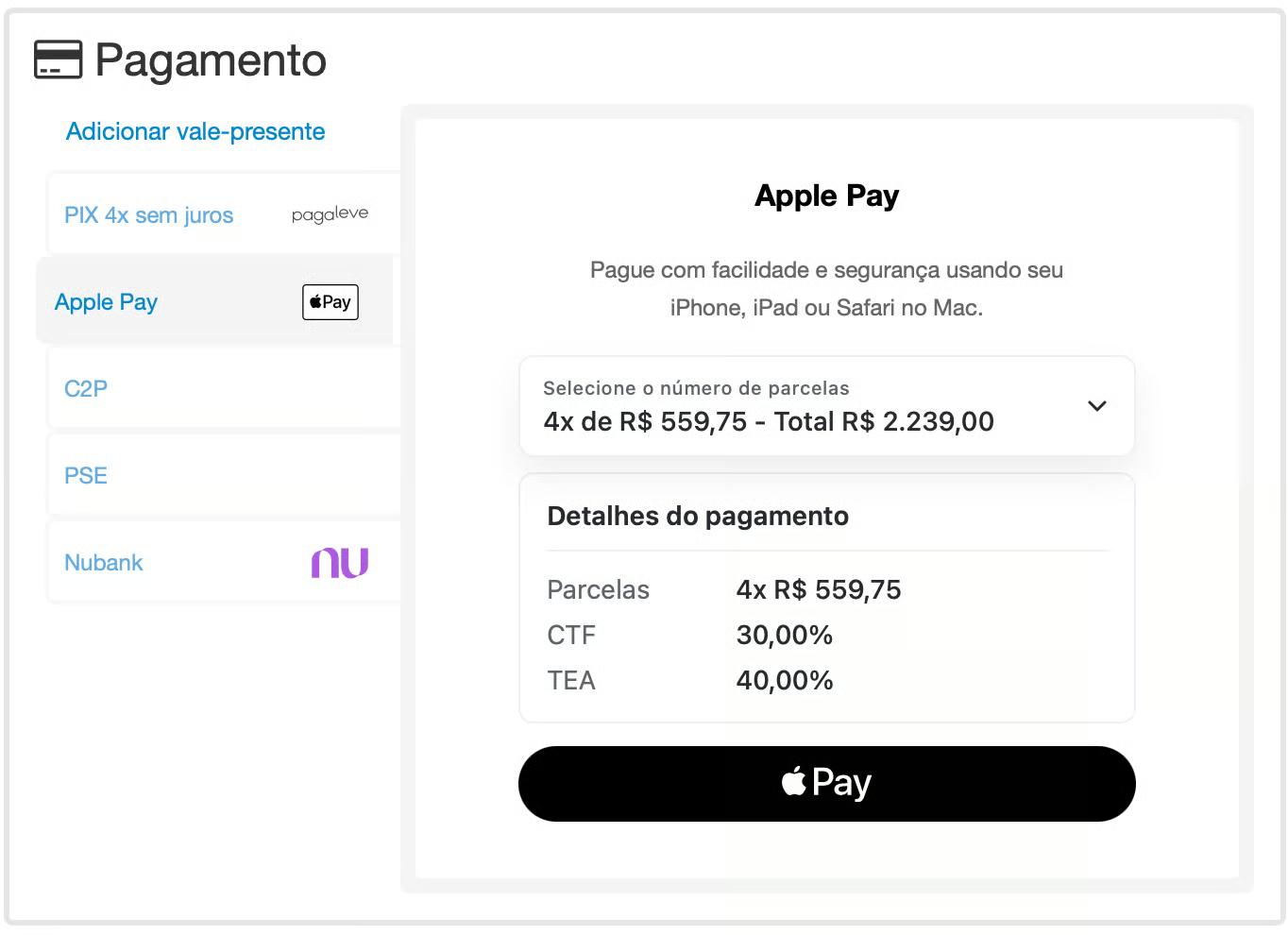
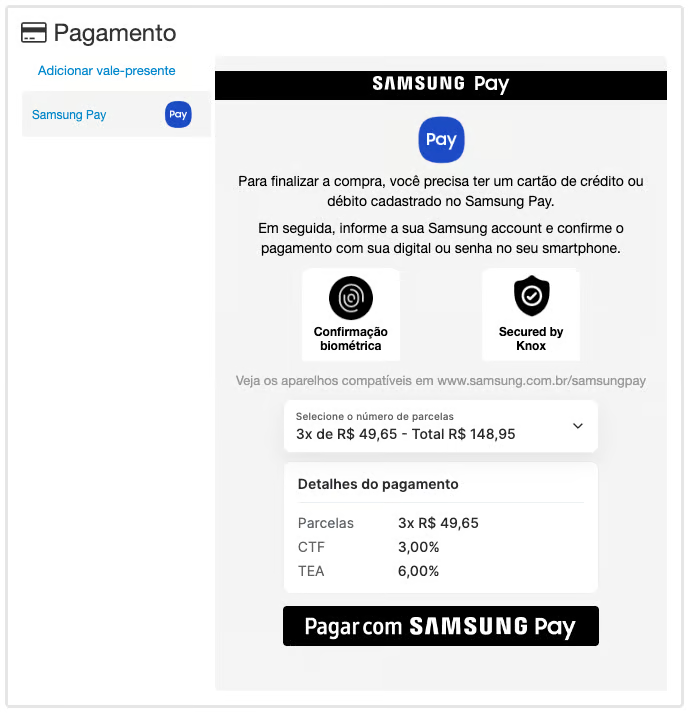
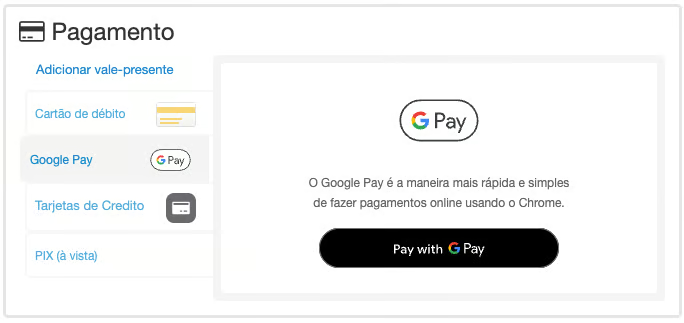
  • Built the checkout extension and connector changes for direct Apple Pay, Google Pay and Samsung Pay payments on VTEX, later adding installment support. Explore the contribution below.
  • Developed, maintained and published the WooCommerce payment plugin, including addressing feedback from the WordPress Plugin Directory review.
  • Created Yunex to share integration knowledge, support incident investigations and automate knowledge-update proposals and post-deployment reports. Explore the contribution below.
  • Used Claude Code daily for research, planning, implementation, debugging and documentation, developing reusable skills and agent workflows while retaining responsibility for technical decisions, code review and validation.
ITGlobers

E-commerce applications

  • React
  • TypeScript
  • JavaScript
  • VTEX IO
  • GraphQL
  • CSS

Mid-level Frontend Developer

Built e-commerce solutions for clients across Latin America, Europe and Asia, adapting interfaces and applications to business needs.

  • Built complete VTEX storefronts, including home, product listing, product detail, checkout, order confirmation and login pages.
  • Implemented reusable components and responsive layouts with design and development teams to maintain a consistent user experience.
  • Migrated Jumbo’s checkout customizations into maintainable modules with React, TypeScript, Sass and a VTEX-compatible Webpack build. Explore the contribution below.
  • Developed custom applications and integrations with React, TypeScript, VTEX IO and GraphQL, focusing on maintainability and performance.
  • Optimized resource loading and interface responsiveness, and resolved layout shifts caused by late rendering.
  • Contributed to development estimation and planning with multidisciplinary teams.

Frontend Developer

Contributed to the development and maintenance of VTEX-based online stores, implementing interfaces and functionality with React.

  • Developed and maintained e-commerce interfaces, adapting them to each project’s functional and visual requirements.
  • Implemented features and improvements in VTEX storefronts, with attention to code quality, performance and visual consistency.
  • Collaborated with multidisciplinary teams to implement solutions and improve shopping experiences.

Personal projects

Build. Question. Learn.

Independent projects that put engineering ideas into practice, with room to examine the decisions and lessons behind them.

Fullstack · learning demo

Order Returns Manager

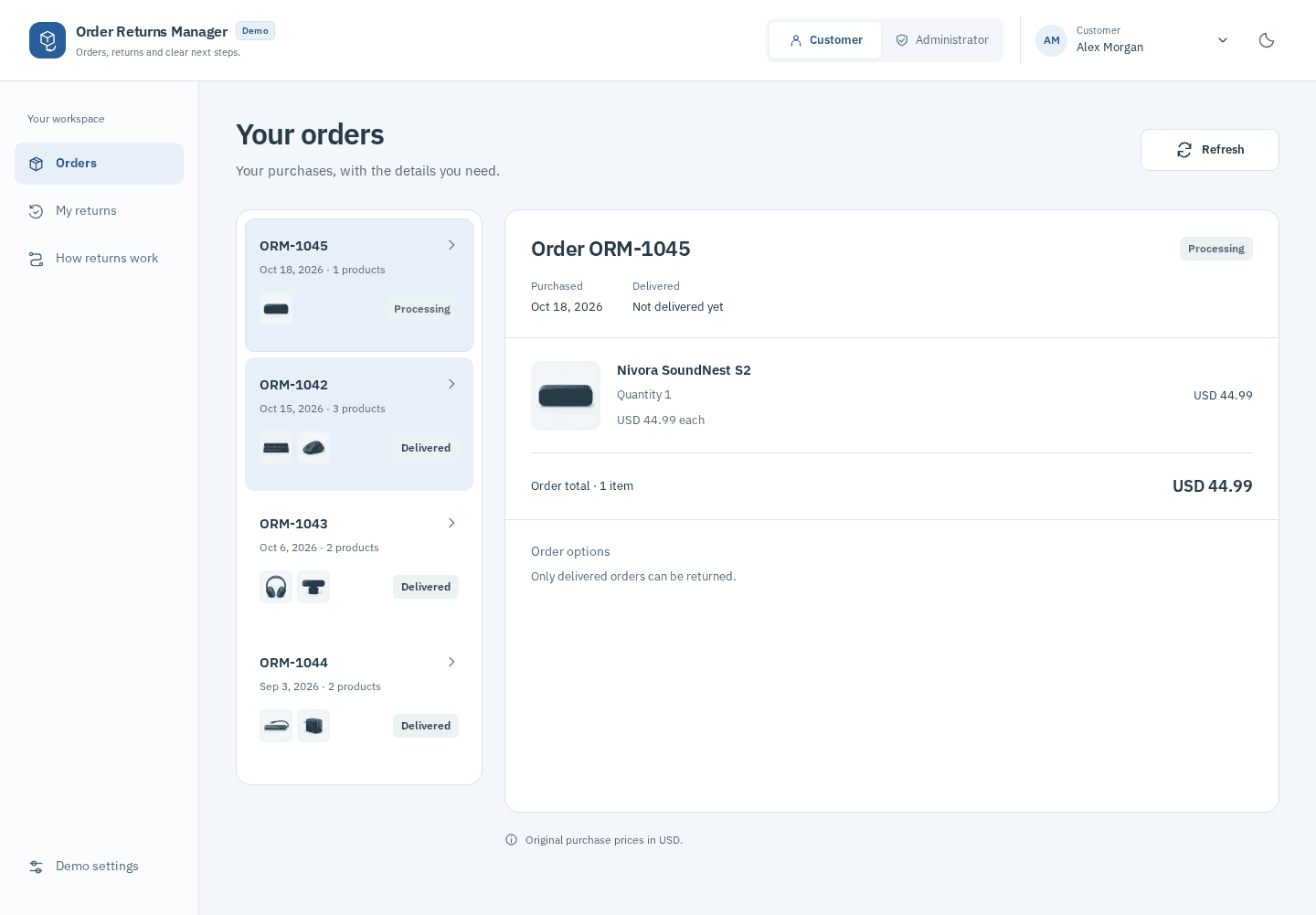
A fullstack demo to explore specification-driven development with Codex and GitHub Spec Kit. Fictional order returns provide a concrete setting for examining business rules, data consistency and independent visitor environments.

  • Next.js
  • React
  • TypeScript
  • Tailwind CSS
  • PostgreSQL
  • Prisma
  • GitHub Spec Kit
View project
Order Returns Manager customer workspace showing sample orders, purchased products and quantities.
Customer view: fictional orders, purchased quantities and return eligibility.

The engineering question

How can specifications bring more structure to development with AI agents?

From a problem to a shared capability

Contributions, in depth.

The context, decisions and team value behind work I have taken ownership of.

Yuno / Yunex

Specialist knowledge, working for the whole team.

I designed and built an AI-assisted tool for the Yuno–VTEX integration: shared answers and incident investigation, automated knowledge updates and post-deployment monitoring. Engineers used it in the terminal; colleagues across the company accessed its question-and-investigation agent in Slack.

Self-initiated · Design, implementation and continuous evaluation

Value for the team

The team gained direct access to integration knowledge, reducing dependency on a single specialist. Daily update proposals helped keep that knowledge current, while shared deployment reports gave the team visibility into production behavior. Colleagues reported saving time, and I observed considerably fewer direct questions.

Conceptual view · access and investigation

    • Team terminalExisting Claude plugin
    • Company SlackInternal company agent
    • YunexShared questions and investigation
    • Knowledge base
    • Current code
    • Datadog logs
    • Documentation + Jira
Both access channels used the same knowledge foundation. Knowledge maintenance and deployment monitoring were additional team workflows, with updates and reports shared in Slack.

What the solution made possible

  • Answers and incident investigation

    Relevant knowledge, current code, Datadog logs, documentation and Jira context supported product questions and on-call investigations. The agent could state uncertainty and ask for missing information.

  • Automated knowledge maintenance

    A daily Claude Routine collected product changes and incidents, proposed knowledge-base updates in a pull request and notified Slack for team review and approval.

  • Post-deployment monitoring

    A locally executed skill reviewed production Datadog logs for one hour after a deployment, posting assessments every five minutes in Slack so the team could review findings and act.

Context, decisions and validation

The problem and my contribution

Questions from TAMs, KAMs, PMs and engineers repeatedly depended on my SDK context and VTEX experience. Requests and on-call investigations competed with sprint work, and even simple questions could wait for my availability.

I initiated and implemented Yunex end to end. I consolidated six months of tasks, discussions, documentation and incident history, cross-checked conflicting information and organized the knowledge into Markdown topic modules.

I added Yunex to the existing Core Checkout Claude plugin and used the AI team’s company-agent platform to make questions and investigations accessible through Slack. The terminal workflow could also support engineers implementing sprint features.

Decisions behind the workflows

I chose shared access over a personal assistant so requests could reach the knowledge directly. Engineers kept a terminal workflow; nontechnical colleagues could use Slack without learning another interface.

Conceptual questions started with relevant knowledge modules and targeted code checks. Incident investigations relied more heavily on current code and Datadog logs. Selecting sources according to the question was intended to avoid unnecessary retrieval and token use.

Knowledge-update collection and proposal creation ran daily, while acceptance remained a human review step. Monitoring ran locally and reported its assessments to a shared Slack channel, giving the team visibility and a trace of the deployment review.

Evaluation and continuous refinement

I compared responses with previously resolved questions and incidents, asked the agent not to use historical answers during those exercises and added new evaluation scenarios. I also supervised initial company-wide responses for correctness, freshness and possible hallucinations.

The agent was instructed not to invent information, to communicate high, medium or low confidence in hypotheses and to request more context when needed. I personally investigated unresolved cases and refined the workflow based on missing information or an unsuitable investigation path.

Colleagues increasingly came to me to validate an existing answer, which required less effort than handling the whole request. Nontechnical colleagues also reported saving time by clarifying questions directly in Slack.

In practice: investigating order cancellations

Merchants reported order cancellations attributed to the plugin. Colleagues used Yunex to investigate and inspect logs, identifying intermittent VTEX API failures that prevented some payments from completing.

The investigation helped distinguish an upstream platform failure from an error originating in the plugin, giving the team a clearer explanation of the reported behavior.

Yuno / Enhanced wallet checkout

Wallet payments, directly in checkout.

I designed and implemented the checkout extension and Payment Connector changes that brought Apple Pay, Google Pay and Samsung Pay directly into VTEX’s payment step. Shoppers could open their wallet without an intermediate Payment App screen, and merchants chose when to enable the experience. I later extended it with installments.

Technical design · Checkout application · Payment Connector

Value for the team

Shoppers gained a more direct wallet experience. Yuno could offer merchants an additional integration option, which was positively received and adopted by some stores. Supporting connector capabilities also enabled reuse in merchant-controlled frontends and mobile applications.

Shopper journey · conceptual comparison

Previous experience

  1. Select a wallet
  2. Press VTEX’s generic pay button
  3. Open the intermediate Payment App
  4. Press the wallet’s pay button
  5. Confirm inside the wallet

Enhanced experience

  1. Select a wallet
  2. Press its button inside checkout
  3. Confirm inside the wallet
The change removes the intermediate screen and an additional payment-launch action. Confirmation inside the wallet remains part of the flow.

What the solution made possible

  • Direct entry, optional adoption

    The selected wallet’s button appeared inside checkout, replacing the generic pay action for that flow. Merchants enabled it through configuration, while stores keeping their existing setup continued using the earlier experience.

  • Installments as the next step

    After delivering direct wallet buttons, I added the changes needed to support installment payments. The checkout could show available plans and financing details alongside the wallet payment action.

  • Reusable payment integration

    I connected wallet tokenization to VTEX authorization through the Payment Connector. The exposed capabilities also supported merchants implementing their own checkout or mobile interfaces.

Context, decisions and validation

The problem and my contribution

Product wanted to improve a fragmented wallet experience: shoppers pressed VTEX’s generic pay button, waited for Yuno’s Payment App and then pressed another button to open the wallet.

VTEX controlled the checkout core and payment sequence. Drawing on checkout customizations I had implemented at ITGlobers, I identified a viable approach using VTEX’s checkout-script extension mechanism.

I designed and built the injected application and supporting Payment Connector changes and endpoints. The application detected wallet selection, hid the generic VTEX button and rendered the wallet’s button within its payment-method area.

How wallet interaction connects to payment creation

Completing the wallet interaction generated a One Time Token (OTT) through Yuno’s SDK. At that stage the payment had not been created. The application sent the token to the Payment Connector, which stored it in VBase.

The application then initiated VTEX authorization. When VTEX called the connector, it retrieved the OTT and used it to create the payment in Yuno and return the resulting status. Rejected payments kept the shopper at the payment step; successful payments proceeded to Order Placed.

Technical flow · tokenization before payment creation

    • Wallet interaction → OTTYuno’s SDK generates the token; no payment exists yet.
    • Application → Payment ConnectorThe connector stores the OTT in VBase.
    • VTEX authorization → Payment ConnectorThe connector retrieves the OTT.
    • Create payment in YunoReturn its status to VTEX and continue checkout.
Wallet interaction happens earlier in checkout, while payment creation remains part of the connector’s response to VTEX authorization.
Compatibility and the installment extension

Each merchant could opt in through a small checkout configuration. The previous Payment App flow continued to work for stores that kept their existing setup, making adoption a choice rather than a forced migration.

The initial delivery focused on direct wallet buttons. In a subsequent phase, I implemented the changes required for installment payments. Both phases formed part of the same contribution.

Validation and merchant adoption

I tested the different wallets in Yuno’s VTEX development account, covering approved and rejected payments and error scenarios. During development, I added and inspected Datadog logs to trace the data flow and identify failures at different steps.

Merchants welcomed the additional integration option, and some migrated to it. The improvement was visible in the interaction itself: shoppers reached their wallet directly from the checkout payment step.

Beyond the native VTEX checkout

The connector changes and endpoints also enabled merchants to reuse the integration in headless frontends and mobile applications communicating with VTEX through its APIs.

Those merchants controlled their own interface and implementation instead of injecting the native-checkout script. My contribution was the supporting integration capability; the merchant teams built their own applications and UI.

Yuno / Multi-seller card payments

Card payments across multiple sellers.

I designed and implemented Payment Connector support for card purchases split into seller suborders in VTEX. The connector reused shared antifraud session context to process subsequent payments on the server when the Payment App could not be reopened.

Technical design · Payment Connector implementation · Integration testing

Value for the team

This delivery unblocked a major Brazilian marketplace’s migration of payment traffic to Yuno. It also removed an integration gap that could prevent other merchants operating with multiple sellers from choosing Yuno.

Conceptual flow · sequential suborders

    • First suborder · browserPayment App + SDK: device context and 3DS when required
    • After success · recover contextFind the prior Yuno record using the shared purchase reference
    • Next suborder · serverReuse the antifraud session context to create its payment
    • Continue one suborder at a timeRepeat the server path for the remaining seller suborders
If the first suborder fails, VTEX cancels the purchase and stops the sequence. Otherwise, subsequent suborders are authorized and processed separately, one after another.

What the solution made possible

  • One purchase, shared antifraud context

    The connector linked seller suborders through their shared purchase reference and retrieved the existing Yuno record. This kept the browser-collected device context available for subsequent payments.

  • Subsequent payments on the server

    After the first suborder succeeded, the connector could create the remaining payments as VTEX authorized them one at a time, without needing to open the Payment App again.

Context, decisions and validation

The marketplace requirement and integration constraint

A major Brazilian marketplace needed card payments across multiple sellers before moving its transaction traffic to Yuno. VTEX split those purchases into suborders and sent a separate authorization for each one.

The existing integration relied on the Payment App and SDK to collect browser context for antifraud checks and handle 3DS when required. Only the first suborder could use that path; later authorizations arrived in seller accounts where the Payment App could not be reopened. Those subsequent suborders could not be processed and were cancelled.

I identified the missing context handoff and implemented the connector changes in full, enabling subsequent payments to be created server-side using the antifraud session associated with the purchase.

Linking suborders to the browser session

Suborders shared a base purchase reference and used suffixes such as -01 and -02. Before processing an order, the connector checked Yuno for an associated record. For subsequent suborders, it found the information from the same purchase and reused its antifraud session context.

The session identifier lets antifraud services associate each payment with device data collected in the shopper’s browser. Yuno’s documentation describes using the cart’s orderFormId consistently in the browser and connector. This session identifier and the shared purchase reference serve different purposes: device-context correlation and order lookup.

Sequential authorization and 3DS

VTEX processed the suborders sequentially. If the first suborder failed, VTEX cancelled the whole purchase. Once it succeeded, later suborders could use the existing purchase context while each payment was processed separately.

When required, 3DS ran on the first suborder. Yuno internally handled the related payments using the same card within that purchase, so the shopper did not repeat the authentication for each seller. My implementation provided the connector-side context reuse for this flow.

Validating a multi-seller purchase

I configured a Yuno VTEX development store with its own products and products from a test seller in another development account, reproducing the multi-seller scenario.

I checked that the suborders shared the expected antifraud session and that the PSP could process their payments without declining them because that context was missing.

View all contributions (+2)Show fewer contributions

Yuno / VTEX Subscriptions

Subscription payments beyond the first purchase.

I implemented VTEX Subscriptions support in Yuno’s Payment Connector. The first card purchase prepared the payment method at the PSP for later use; subsequent orders were recognized and processed server-side as merchant-initiated payments (MIT), without requiring the shopper to be present or VTEX to send a CVV.

Payment Connector · Initial-payment preparation · Recurring-payment processing

Value for the team

The delivery resolved subscription-payment failures for a merchant that had moved to Yuno and was seeing recurring orders cancelled. It also expanded the plugin’s capabilities for existing and prospective merchants offering recurring purchases.

Two phases · subscription payment lifecycle

Initial purchase · shopper present

  1. Choose subscription products and frequency
  2. Complete the card payment through checkout and the Payment App
  3. Prepare the payment method at the PSP for future MIT charges

Later cycles · shopper absent

  1. VTEX generates a recurring order
  2. The connector recognizes the subscription cycle
  3. Create a server-side MIT payment with card data, without CVV
VTEX schedules later orders at the chosen frequency. The PSP setup from the initial purchase enables recurring charges through Yuno.

What the solution made possible

  • Prepare the first purchase for renewals

    The initial purchase used the normal checkout and Payment App flow while the integration instructed Yuno and the PSP to retain the payment method for subsequent merchant-initiated charges.

  • Recognize and process recurring cycles

    VTEX’s subscription context and cycle information directed later orders to a server-side payment path. The stored-method setup enabled those charges without a new browser interaction or CVV.

Context, decisions and validation

Restoring recurring purchases after a merchant migration

A merchant already using VTEX Subscriptions moved to Yuno and found that subsequent subscription orders were not processing correctly and were being cancelled. Resolving the issue became an urgent integration requirement.

The initial purchase worked through the existing card-payment flow. Later cycles arrived without an active shopper browser session, and VTEX omitted the card’s CVV. I implemented the connector support needed to prepare the first payment for future use and process renewals directly on the server.

Identifying a subscription cycle

VTEX’s authorization data included interaction with the value “subscription” and information about the cycle number. In this flow, cycle 0 identified the first recurring order after the initial purchase, with subsequent cycles incrementing that number.

The absence of CVV was an additional signal within the VTEX subscription flow. These indicators allowed the connector to distinguish the recurring-payment path from the initial checkout payment.

Preparing and using the payment method for MIT charges

During the first purchase, the integration instructed Yuno and the PSP to retain the payment method for later merchant-initiated transactions. The reference was held at the PSP.

For later orders, VTEX continued sending card information without CVV. With the stored-method setup, the PSP could process the MIT payment through Yuno without requiring another shopper browser session or browser-based antifraud step in this integration.

My work connected initial-payment preparation and recurring-order processing in the Payment Connector. VTEX supplied the subscription scheduling and authorization metadata; Yuno and the PSP supplied stored-credential processing.

Testing later cycles without waiting for the schedule

I enabled Subscriptions in Yuno’s VTEX development account, created plans and associated them with products. In the test store, I selected subscription products and recurrence options and completed the initial purchase.

To validate subsequent cycles without waiting for their scheduled dates, I triggered recurring orders through VTEX APIs and checked that their payments were created correctly on the server.

ITGlobers / Jumbo checkout

A maintainable checkout for Jumbo’s development team.

At ITGlobers, I migrated Jumbo’s VTEX checkout customizations into section-based modules with React, TypeScript and Sass. A Webpack build preserved VTEX’s required delivery format while giving the team a source structure that was easier to extend and debug.

Mid-level Frontend Developer · Complete migration · Jumbo team support on existing behavior

Value for the team

About six months after delivery, the client estimated that checkout development time had fallen by approximately 40%. The team reported easier development and maintenance, less reluctance to make changes and a smoother checkout with faster perceived loading.

Modular source · compatible delivery

    • Checkout sectionsReact and TypeScript modules
    • Shared foundationsReusable logic and Sass styles
    • Webpack buildConfigured transformations and minification
    • VTEX checkoutCompatible JavaScript and CSS assets
I organized the checkout customizations into modules and configured the build to generate the assets required by VTEX.

What the solution made possible

  • Organize around checkout sections

    I mapped the existing customizations, removed unused code and separated cart, profile, shipping, payment, order summary and global behavior, with reusable logic and shared styles.

  • Keep delivery compatible with VTEX

    The configured Webpack toolchain transformed React, TypeScript and Sass sources into the JavaScript and CSS assets VTEX expected, with minification and a watch workflow linked to a development workspace.

  • Optimize checkout images

    I converted suitable images to WebP as part of the loading-performance work, alongside the broader cleanup of obsolete customizations.

Context, decisions and validation

When checkout maintenance became a bottleneck

Jumbo, part of Cencosud in Colombia, had accumulated more than 8,000 lines of JavaScript and 6,000 lines of CSS in its checkout customization files. Understanding behavior, tracing bugs and adding features had become increasingly difficult, requiring more development resources.

I was assigned the complete migration during my Mid-level Frontend Developer role at ITGlobers. Jumbo’s team explained the existing code and answered questions about behavior as I worked through the checkout.

The delivery constraint was VTEX’s expected JavaScript and CSS assets. Keeping that format did not require maintaining all source code in the same large files.

Choosing a workflow the team could maintain

We considered reorganizing vanilla JavaScript and CSS, which would require less initial setup, or adopting React, TypeScript and Sass. The team chose the latter because familiar tools and a better long-term development experience were the main priorities, despite the extra configuration and required knowledge.

Webpack fit the need to control the output for an existing host platform and combine the chosen source types through configured transformations. Its build ecosystem supported JavaScript and CSS minification and the development watch workflow.

Migrating customizations section by section

I reviewed the existing functionality and styles, identified unused code and migrated the customizations incrementally by checkout section. Shared logic and styles were separated from section-specific behavior.

The implementation connected those modules to the native checkout lifecycle: initial DOM loading, VTEX order-form updates and URL hash changes. The development workflow combined build watching with VTEX workspace linking so changes could be reviewed in the checkout environment.

Client and team feedback after delivery

About six months after completion, the client estimated a reduction of approximately 40% in checkout development time, describing more efficient use of its development resources.

Jumbo’s team also described the code as easier to work with and reported less resistance to making checkout changes. They perceived smoother interaction and faster loading. The central outcome was a more maintainable foundation for continued development.

A new chapter

Good work starts with a conversation.

I’m open to Fullstack Software Engineer and Frontend Software Engineer opportunities across industries and technology stacks. If you’re building a team, have an opportunity in mind or simply want to exchange ideas, I’d be glad to hear from you.